Why Capital Gains Tax Matters for NRIs
Many NRIs invest in India through property, mutual funds, shares, or other financial assets. While these investments can generate strong long-term returns, profits earned from selling them are subject to capital gains tax in India. For NRIs, capital gains taxation often feels complex due to overlapping tax rules, higher tax deduction at source (TDS), and documentation requirements.
Understanding how capital gains tax applies helps NRIs plan exits better, avoid surprises at the time of sale, and stay compliant with Indian tax laws.
What Are Capital Gains?
Capital gains refer to the profit earned when a capital asset is sold for more than its purchase price. In India, capital assets include:
- Residential or commercial property
- Equity shares and mutual funds
- Bonds and debentures
- Land and other specified assets
Capital gains are taxed in the year in which the asset is sold.
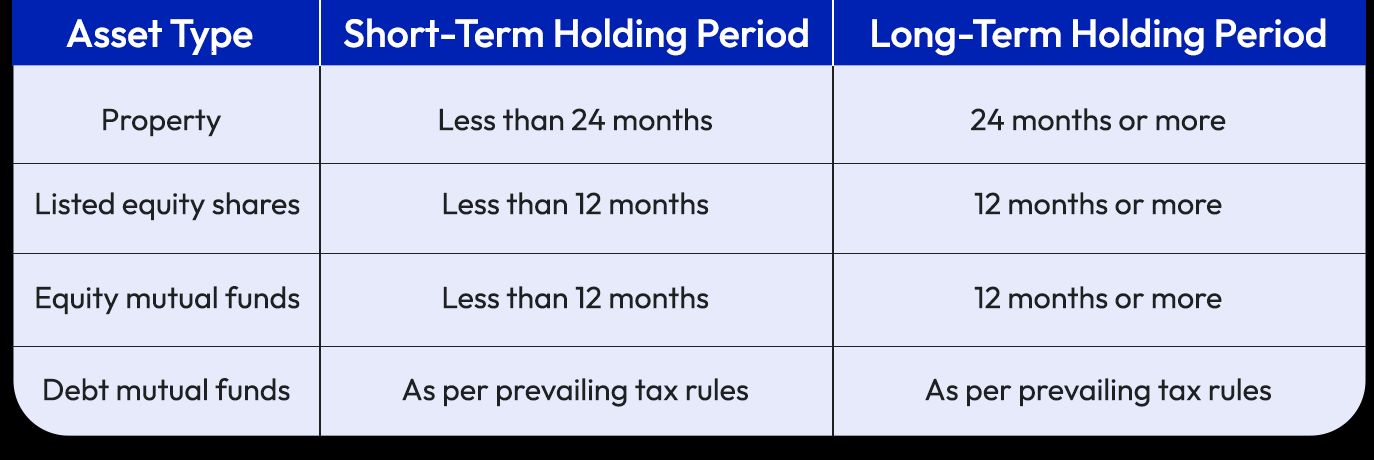
This classification determines the tax rate and available exemptions.
Capital Gains Tax Rates for NRIs
Property
- Short-term capital gains (STCG): Taxed as per applicable income tax slab rates
- Long-term capital gains (LTCG): Taxed at 20% with Indexation benefits
Equity Shares and Equity Mutual Funds
- STCG: Taxed at 15% (if securities transaction tax applies)
- LTCG: Taxed at 10% on gains above INR 1 lakh, without indexation
Other Assets
- Tax rates vary based on asset type and holding period
Source: Income Tax Department – Tax Rateshttps://www.incometax.gov.in/iec/foportal/help/individual/tax-rates
TDS on Capital Gains for NRIs
One of the biggest differences NRIs face compared to resident Indians is higher TDS at the time of sale.
For NRIs:
- TDS is deducted at source by the buyer
- TDS applies to the entire sale value, not just the gain
- Rates may be as high as 20–30% plus surcharge and cess
NRIs can later claim refunds by filing an income tax return in India.
Exemptions Available to NRIs
NRIs may reduce capital gains tax through exemptions, subject to conditions.
Common exemptions include:
- Section 54: Reinvestment of property gains into another residential property
- Section 54EC: Investment in specified bonds
- Section 54F: Sale of non-residential assets reinvested into property
Each exemption has timelines, limits, and compliance requirements.
Double Taxation Avoidance Agreement (DTAA)
India has DTAA agreements with multiple countries to prevent double taxation. While capital gains are usually taxed in India for Indian assets, DTAA provisions may help:
- Avoid taxation on the same income in the country of residence
- Claim tax credit for taxes paid in India
Claiming DTAA benefits may require a Tax Residency certificate(TRC).
Common Mistakes NRIs Make
NRIs often face issues due to:
- Not accounting for high TDS at sale
- Missing exemption timelines
- Incorrect holding period calculation
- Not filing tax returns to claim refunds
Early planning helps avoid cash flow issues and penalties.
FAQs: Capital Gains Tax for NRIs
Do NRIs pay higher capital gains tax than residents?Tax rates are similar, but NRIs face higher upfront TDS, which can later be refunded.
Is indexation available to NRIs?Yes. Indexation benefits apply to long-term capital gains on property and certain assets.
Is filing a tax return mandatory for NRIs after selling property?Yes, especially to reconcile TDS and claim refunds or exemptions.
Can NRIs claim DTAA benefits on capital gains?In some cases, yes. DTAA provisions depend on the asset and country of residence.
What happens if TDS deducted is higher than actual tax?NRIs can claim a refund by filing an income tax return in India.
Final Thoughts
Capital gains taxation is a critical consideration for NRIs investing in India. Understanding holding periods, tax rates, TDS obligations, and available exemptions allows NRIs to plan asset sales more efficiently and remain compliant.
With proper planning and timely compliance, NRIs can optimise returns while navigating India’s capital gains tax framework with confidence.
Sources & Disclaimer
The information in this article is based on publicly available provider disclosures, marketing materials, industry reports, and general remittance market practices at the time of writing. Exchange rates, fees, transfer speeds, and availability may vary by country, payment method, bank, and time period.
Company names mentioned are included for illustrative and comparative purposes only. Any performance metrics, pricing examples, or user experiences referenced reflect advertised claims or individual reports and should not be treated as guarantees. Readers are encouraged to verify live rates, fees, and terms directly with the service provider before initiating a transfer.
This content is intended for informational purposes only and does not constitute financial advice, investment advice, or a recommendation of any specific service.